When You See a Sea Moss Farm, Look Again: What’s Really Happening Beneath the Surface
Part 2 of our Blue Economy Series
In many Caribbean conversations, sea moss is still misunderstood. Some see it as a nuisance. Others see it as a quick-money opportunity. Few pause to ask the deeper question:
What actually happens to the marine environment when sea moss farming is done responsibly?
The answer may surprise you.
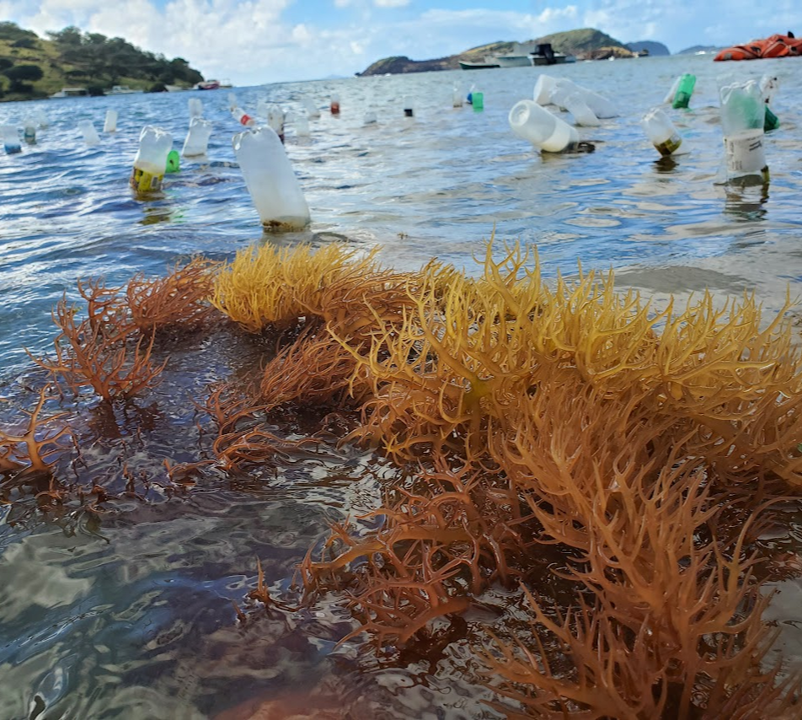
Sea Moss Farms Are Not Empty Spaces, They Are Living ECOsystems
When a well-designed sea moss farm is established, the ocean doesn’t become crowded or chaotic. It becomes structured.
 Beneath the surface, something remarkable begins to happen.
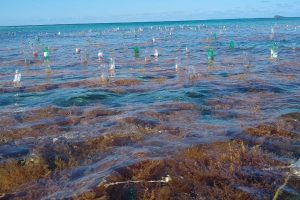
New schools of fish appear, darting, splashing, and moving in coordinated bursts. Juvenile fish find refuge among the bunches, safer from predators during their most vulnerable life stages. Snappers often use the sea moss lines as shelter, growing larger and stronger before heading into open water.
Spiny lobsters benefit too. The structured habitat allows juveniles to increase their survival rates before migrating deeper offshore. Grazers such as parrotfish and chubb species move through the area, feeding and contributing to reef health. Stingrays pass through, sea cucumbers settle nearby, and conch find calmer, more protected zones.
Even turtles are drawn in, not to destroy farms, but to feed. Through intentional design, external borders can be planted with species that form part of turtles’ natural diets, allowing them to feed freely without damaging cultivated sea moss. This kind of planning transforms potential conflict into coexistence.
This is not accidental.
This is ecosystem thinking and building.
Sea Moss as an Ecosystem Engineer
Sea moss does more than grow, it modifies its environment.
By slowing water movement, sea moss farms help reduce sediment disturbance and create calmer microhabitats. These conditions support marine biodiversity and allow fragile species to thrive. Over time, such environments contribute to marine regeneration, not depletion.
 Sea moss also plays a role in:
-
carbon sequestration
-
nutrient cycling
-
supporting spawning and nursery grounds
-
stabilising nearshore marine ecosystems
In a warming ocean, these functions matter.
Sea moss farming, when responsibly managed, is not extractive.
It is restorative.
This Is Why Planning, Zoning, and Licensing Matter
These benefits do not happen by chance.
 They require:
-
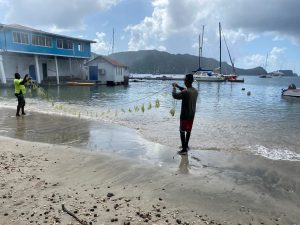
proper site selection
-
thoughtful zoning
-
clear licensing frameworks
-
cooperation between farmers, fishers, environmental managers, and governments
When these systems are absent, sea moss farming can feel disruptive. When they are present, sea moss farming becomes infrastructure for the blue economy.
This is especially important in tourism-driven environments. Sea moss farms should not be seen as competing with tourism, but as complementary, enhancing marine life, improving water quality, and opening new pathways for eco-and community-based tourism.
Across the Caribbean, visitors are already showing interest in guided farm tours, educational dives, and storytelling experiences that connect food, health, and ocean stewardship. These are opportunities waiting to be shaped responsibly.
The Caribbean Is Already Moving
This is not theoretical.
Pilot initiatives have emerged in Barbados. New sea moss enterprises are taking shape in Antigua and Barbuda, St. Kitts and Nevis, Dominica, and beyond. Across the region, governments, communities, and entrepreneurs are beginning to recognise that sea moss is not just a crop, it is a system.
That system touches:
-
marine conservation
-
climate resilience
-
food and nutrition
-
livelihoods
-
innovation and youth employment
The global seaweed market is projected to reach US$7.5 billion by 2030. The question is not whether the Caribbean should participate, but how.
From Competition to Complementarity
The mistake many regions make is treating emerging blue economy sectors as competitors to existing industries. Sea moss does not need to compete with tourism, fisheries, agriculture, or environmental management.
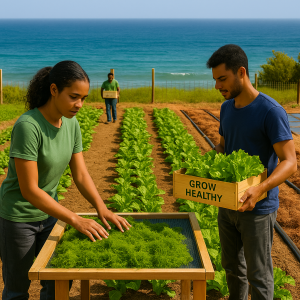 With the right model, these sectors become stakeholders in the same system.
Fishers bring water knowledge.
Tourism brings visibility and storytelling.
Environmental agencies bring stewardship.
Agriculture brings processing and value-added innovation.
Youth bring energy, creativity, and digital reach.
This is how volume is built responsibly.
This is how bottlenecks are avoided.
This is how politics steps back and governance steps forward.
Expertise Matters
As interest grows, so does responsibility.
Across the region, there remains a shortage of technically trained sea moss specialists, people who understand farming systems, environmental impacts, markets, and governance together. This gap must be addressed if Caribbean initiatives are to meet increasingly stringent global health, safety, and traceability standards.
That is why regional collaboration, shared learning, and expert-led frameworks are essential, not as bureaucracy, but as guardrails.
Seeing the Ocean Differently
The next time you see a sea moss farm, don’t see clutter.
 See:
See:
-
fish learning to survive
-
ecosystems finding balance
-
communities building livelihoods
-
carbon being captured
-
the blue economy taking shape
Sea moss is not a nuisance. It is an invitation, to rethink how we live with the sea.
And if we accept that invitation wisely, the Caribbean can lead not just in production, but in how blue economies are responsibly built.
Coming next in the series
Sea Moss and Health: Why this marine plant is becoming a cornerstone for nutrition, skin, hair, and wellness in Caribbean and diaspora communities.
? Support Our Work
Help us build healthier communities and stronger local economies.
This blog is published by Sustainable People & Communities Inc.(SPCI) through the Grow Healthy initiative.