Beyond the Nets: Building a Youth Legacy in Aquaculture
For too long in the Caribbean, youth involvement in aquaculture has been framed as an afterthought, something to “expose” children to, rather than intentionally build into the value chain. But if we are serious about developing resilient blue economies, we must move beyond symbolism and start designing systems where young people are seen as contributors, learners, innovators, and future leaders.
This is not theory. It is work we have already been doing, quietly and responsibly, in St. Vincent & the Grenadines and Grenada.
Learning the Water, Safely and Intentionally
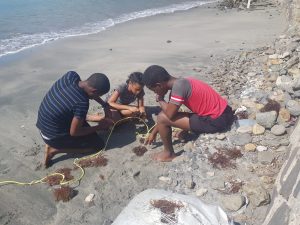
Our approach to youth in sea moss farming has never been about putting children at risk or using them as labour. Instead, we encouraged sea moss farmers to bring their children alongside them, under strict supervision, within clearly defined and safe spaces.
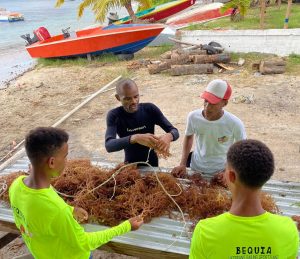 Youth were not sent into open water unsupervised. They were taught to:
-
observe site conditions
-
handle sea moss carefully
-
understand frame systems and drying processes
-
see how harvesting connects to processing and markets
They were allowed to touch, feel, and engage, because learning is sensory, not abstract.
This was exactly how I myself became deeply connected to sea moss farming during training in Grenada. Touching a fresh bunch of sea moss for the first time sparked something, energy, curiosity, possibility. That moment matters. It’s how legacy begins.
Youth Are Not “Helpers”, They Are the Missing Links
If we look honestly at the Caribbean aquaculture sector, one gap is glaring:
there is a shortage of technically trained sea moss specialists.
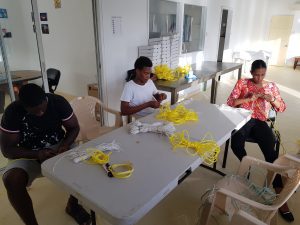 Not just farmers, but:
-
production coordinators
-
quality and safety monitors
-
logistics planners
-
administrators
-
data and compliance officers
-
marketers, storytellers, and content creators
This is where youth belong, not as an afterthought, but as a pipeline.
Graduates and young professionals can fill the spaces between traditional fishers, processors, exporters, and public-sector field officers. With proper training, they can become some of the world’s most informed innovators in tropical aquaculture, especially as global markets tighten health, safety, and traceability requirements.
Aquaculture as a Healing Economy
Sea moss is not just a commodity. It is a response.
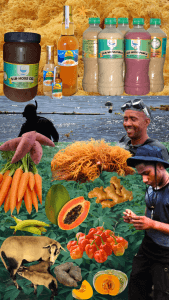 Across the Caribbean and diaspora communities, we face rising non-communicable diseases (NCDs), skin and hair challenges, nutritional deficiencies, and post-COVID stagnation, especially among youth experiencing learned helplessness and disconnection.
This is where aquaculture meets wellbeing, purpose, and dignity.
Through the Grow Healthy initiative, we’ve been working with youth affected by postCovid-2019 disruptions by combining:
-
mental health interventions
-
holistic life skills development
-
practical internships
-
service learning on regenerative agriculture and sea moss farms
Young people don’t just farm. They learn to process, extract, and formulate, using sea moss as a base ingredient alongside specialised local crops, to create user-ready, value-added products for local, regional, and global markets, with special emphasis on the Caribbean diaspora.
This is education with outcomes. Healing with income. Purpose with structure.
The Blue Economy Youth Deserve
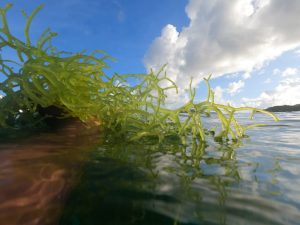 Aquaculture is one of the most powerful blue economy pathways available to the Caribbean, but only if we think beyond narrow definitions.
Sea moss farming can contribute to:
-
ecosystem restoration
-
carbon sequestration
-
reduced ocean movement and erosion
-
marine species recovery (spawning grounds, algae, micro-habitats)
With the right frameworks, it can also connect to:
-
mangrove restoration
-
integrated aquaculture (e.g. sea moss alongside prawns, lobster, conch)
-
non-traditional revenue streams such as blue and carbon finance
Youth must be part of this conversation now, not later, because they will inherit the standards, technologies, and responsibilities being designed today.
Paying It Forward, Responsibly
We’ve already seen interest from youth and communities in Grenada, Bequia, the Grenadines, and even the Bahamas. The demand is there. The curiosity is there. What’s been missing is a responsible pathway.
 Youth in aquaculture is not about romanticising the sea.
It’s about designing an ecosystem where learning, safety, science, markets, and livelihoods intersect.
If we do this right, we don’t just build farmers.
We build a generation of Caribbean blue-economy leaders.
And that is a legacy worth protecting.
? Support Our Work
Help us build healthier communities and stronger local economies.
This blog is published by Sustainable People & Communities Inc.(SPCI) through the Grow Healthy initiative.