Why Sea Moss Matters: Our Story of Resilience, Exploitation, and Vision
A Caribbean Opportunity Too Big to Ignore
Sea moss farming is not just another project. It is an opportunity to restore marine ecosystems, reduce carbon emissions, diversify our use of Caribbean marine spaces, and build sustainable livelihoods for coastal communities. It is an industry with global demand, with the power to create value-added health products, generate decent jobs, and reduce dependency on imports. Sea moss is not just a plant. It is a projected USD $6.5 billion global industry by 2030.
Cultivating healthy environments, empowering communities, thriving people. That’s our mission, and it’s why we’ve stayed the course in sea moss. But the road here hasn’t been easy. It’s been full of breakthroughs, and full of betrayal, intellectual property theft, and a deafening, disrespectful silence from institutions that claim to champion “sustainable development.”
“The Caribbean is no longer in a world of preferential trade deals or ‘aid as usual.’ Sustainability and innovation are no longer optional. Gatekeeping and silencing innovators is literally sabotage.”
The Caribbean loves to talk about “food security,” “blue economy,” and “sustainable livelihoods.” But talk is cheap. We strongly believe in “walking the talk”. On the ground, many local innovators are locked out, sidelined, and silenced, even as their work proves the very solutions politicians boast about on television.
We have always believed in this vision. But believing was not enough; we had to live it.
How It Began (Grenada ➜ SVG)
By what felt like divine intervention, I was introduced to sea moss while on assignment in Grenada, nominated by the Caribbean Centre of Excellence for Sustainable Livelihoods (CoESL) and contracted by CANARI to mentor MSMEs in coastal communities in St. Vincent and the Grenadines.
On a field visit, a farmer in St. Andrew shared the craft from the water’s edge. I volunteered (outside the contract) to help him scale. I returned in 2019 and spent six months unpaid in a shared knowledge exchange: he taught me the technical side of farming; I brought operational and business management.
I saw a replicable model. Back in SVG, from 2020–2024, I trained approximately 50 entrepreneurs across Union Island, Mayreau, Bequia, and Canouan in responsible sea moss farming and value-added production, marketing, and sales. We supplied locally, exported sun-dried sea moss (with bulk to the USA & Canada), and developed prototypes with local processors: gels, soap, wine, and jams.
The Harsh Reality
Progress came with a bitter undertow. Organizations we were assigned to talked about “cooperatives,” but operated like profit machines benefiting specific non-productive insiders, not the fishers and sea moss teams, particularly vulnerable women standing and working for hours in cold, seawater.
Theft, vandalism, and IP abuse
Pilot experiments were vandalized. In Grenada, Union Island, and Bequia, up to 75% of farmed sea moss on frames set at sea were stolen. Twice, we lost entire experimental farms, destroyed in malice. Farmers we trained, despite written agreements, split off to form private enterprises, in some cases copying our packaging text verbatim. Processors we commissioned later spoke as if prototypes were solely theirs. That’s not collaboration; that’s IP theft and broken trust.
How Caribbean Expertise Gets Exploited
This isn’t just about sea moss. It’s about how Caribbean professionals are treated. I was offered a two-year mentor contract for USD $1,000, a pittance. When I worked to build an enterprise so the model could sustain itself, I met malice, gatekeeping, and reputational attacks, later retracted only after legal pressure.
Too often, people enter NGOs and agencies to guard gates, not open them. Some regional chapters of respected funds preach monitoring and evaluation but resist accountability. As Francesca Almeida wrote in her essay “Doing Well While Doing Good,” until we properly fund grassroots actors, we risk losing the people most trusted to deliver impact.
We also have livelihoods to protect. How can we build sustainable communities if the builders themselves are kept unsustainable?
Recognition—Yet Resentment
Even as we were sidelined, our work was recognized. We provided free consultations to the Nature Conservancy and to Georgetown University’s study on the Blue Economy and Sea Moss Production in Saint Vincent and the Grenadines, helping shape policy recommendations at the regional level, and to the Fisheries Division in SVG during updates to the Fisheries & Aquaculture Act. I was appointed as the private-sector representative, St. Vincent and the Grenadines, to the CRFM Aquaculture Working Group.
But with recognition came resentment. We self-financed every aquaculture initiative. Meanwhile, several with less capacity, including people we trained, were publicly funded and platformed for photo-ops, while we were repeatedly rejected.
One stark example: we submitted a project to scale sea moss in St. Vincent and the Grenadines. It was turned down. Yet another NGO later sought to contract us to deliver training for a very similar project. We were told that as consultants, we were not eligible to receive a grant. Meanwhile, a trainer we contracted was later awarded one of those same grants to set up a parallel enterprise. That’s a dangerous game. It rewards optics over outcomes.
My expertise is not imaginary. I am listed by the Food and Agriculture Organization (FAO) in their directory of Caribbean aquaculture experts, formally recognized as a sea moss specialist. This recognition at the global level makes the local silencing even harder to accept. How can one be validated by international institutions, yet dismissed at home? That contradiction is one of the clearest signs that our Caribbean development model is broken.
Exploitation in The Bahamas
My most bitter experience came in The Bahamas. This pain isn’t limited to regional politics; in The Bahamas, exploitation cut even deeper.
I was sourced through a regional partner to help build a sea moss industry in Freeport. Midway through the preparations to launch their pilot farm, negotiations collapsed. I was then handed over to a group of so-called “millionaire investors” on the Exumas, who promised to take the project forward. Contracts were verbally renewed, virtually drafted, submitted, deposits and accommodations were agreed, pilot testing began, but no formal contract was ever signed despite repeated requests. I was informed on arrival that no work permit had even been processed.
At Nassau airport, the immigration process itself was disgraceful. As a Caribbean national, I was treated like a criminal or an illegal alien in a country that prides itself on tourism excellence. That was my first warning sign.
On the ground, things worsened. I was blocked from conducting proper trials, forced into unsuitable marine conditions that guaranteed failure. Gradually, my role was reduced to that of a “yard man,” under the guise of being part of “management.” The verbal abuse was relentless, cussed out, insulted, and humiliated in front of the staff I was supposed to lead.
For six months, I was underpaid, overworked, and treated like disposable labor. It was a simulation of human trafficking, lured with promises of opportunity, trapped in degrading conditions, and denied dignity or recourse.
When I finally withdrew and attempted to leave, the airport became a stage for public humiliation. One of the prominent entrepreneurs insisted I be searched by police, questioned by immigration, harassed, and threatened with arrest in front of hundreds of passengers. Thankfully, Senior Police Officers recognized the truth and cleared me. It was an attempt to break me, to strip away dignity. But I survived.
Suppose I had been weaker? I might never again have wanted to see sea moss, or even it’s development in the Caribbean. Experiences like these can derail innovators’ mental health and wipe out the very passion needed to drive transformation. That is the real danger.
Relocating to Barbados—and Hitting Bottlenecks
We relocated operations to Barbados in early 2025 to scale responsibly: a one-acre sea moss nursery and farm at Colleton, St. Lucy, merged with a 5-acre regenerative agricultural farm, to grow local specialty crops to extract and infuse into sea-moss-based value-added products, a manufacturing pathway which could be formed with the International Food Science Centre (BIDC).
We hoped for something different. And in one way, it was. The Fisheries Division did everything right: they reviewed our strategic and business plan, registered us as aqua-culturists under the new Act, and facilitated every step within their mandate. They are a model of facilitation, special appreciation to Chief Fisheries Officer, Dr. Shelly Ann-Cox, for her participative leadership style.
But beyond Fisheries, the same bottlenecks reappeared.
-
We were referred to Export Barbados for discussions as far back as 2022. I submitted strategic and business plans. Their own sea moss pilot ended in June 2024 with discussions leaning towards a to hand over for commercialization. So we taught, In May, everything stalled, all the promises that were to follow has fallen down, stalled. Since then, a deafening silence as if we are enemies in the process. Meanwhile, the pilot frames at Colleton remain wasted at sea since Hurricane Beryl, a missed opportunity for Barbados’ blue economy.
-
BADMC received our land lease application in March 2025. To date, no response. Other farmers report similar waits of 3–4 years. In the meantime, over 40 acres of BADMC-managed land sit idle, some reploughed for appearances rather than production. Ironically, we are registered as crop and livestock producers, counted in statistics, but cannot access land to produce.
This is the contradiction: regular speeches about food security and employment, while innovators are locked out, land lies idle, and infrastructure decays. Anyone can drive past idle plots at Graeme Hall, Lears, or Fairy Valley and see acres reploughed for optics but not productivity, while those ready to farm are told to “wait for a program.” That is not facilitation. It is obstruction of progress.
The Bigger Question
We’re still hearing the same refrains: food insecurity, high unemployment, crime and violence, and NCDs spiraling out of control, rising welfare and health costs. The solutions exist, and the Caribbean has the talent to execute them. What we don’t have is a culture that consistently facilitates.
We are not victims, or beggars. We are people who should receive the service from individuals and government departments and agencies, we pay heavily out of our taxes. We are resilient, tenacious, and enduring; that’s how impact is built. We continue coaching teams and communities in the entrepreneurial mindset because sustainability is a practice, not a press release.
The Caribbean is no longer in a world of preferential trade deals or “aid as usual.” Sustainability and innovation are no longer optional. Gatekeeping and silencing innovators is not just frustrating, it actively undermines progress.
Sea moss is not just a plant. It is a $6.5 billion global industry by 2030. It is food security, climate resilience, and a multi-income stream opportunity in one. The question is not whether the Caribbean can produce and own a percentage of the market share; the question is whether our institutions will let Caribbean people thrive. The cherry picking needs to STOP.
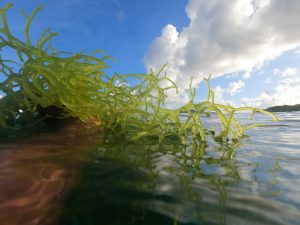
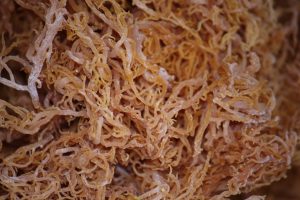
We are ready. We trained farmers, built value chains, created prototypes, and entered local and export markets. With or without institutional support, we will continue.
Why Sea Moss—Right Now
Sea moss sits at the intersection of climate, nutrition, and livelihoods. With clean waters and tropical conditions, the Caribbean can lead, if we choose facilitation over obstruction. We’re committed to building a value chain that meets global standards from pre- to post-harvest, and to sharing that know-how with coastal communities across the region.
We won’t stop. And we won’t be silent.
What Must Change? Five Constructive Solutions to Unlock Caribbean Innovation
-
Stop Competing — Start Facilitating
Agencies should not treat citizen enterprises as rivals. Move idle assets (like idle pilot frames) into productive hands with clear, time-bound permits. Foreign investors must partner with local innovators, not displace them. -
Unlock Land & Inputs for Viable Operators
Shift from cosmetic ploughing to performance leases. Provide land, water, and technical support to operators with tested models and measurable milestones. -
End Gatekeeping — Adopt Reciprocity
Civil servants, contractors, and funder staff are facilitators, not bouncers. Embrace CoESL’s ethic of Reciprocity / Complementary Capitalism, agreements that create mutual benefit (e.g., small royalties for originating IP) instead of extractive one-way deals. -
Separate Politics from Governance
Govern to build, not to brand. Partisan sabotage of citizen-led development reverses progress. Establish local-content, open-call windows where merit and delivery, not proximity to power, decide. -
Make Accountability Real
Publish transparent dashboards on permits, leases, and grants; tie renewals to milestones; welcome independent audits and feedback. Institutions that preach M&E must accept being measured.
As an FAO-recognized aquaculture expert, I know the Caribbean has the knowledge and capacity to build this industry globally. What we lack is facilitation.
Our Pushback
But we are not broken. We are resilient, tenacious, and enduring because that’s how real leadership is born.
We will continue to invest in coaching communities on entrepreneurial mindsets so that sustainability is not just an idea, it’s a practice.
“Disruption”: A Jamaican Insight
I first heard the concept of constructive, positive disruption from Dr. K’adamawe Knife, a Jamaican academic at UWI- Mona. Not chaos, but the kind of disruption that shakes complacency and forces systems to serve people, not just power. Too often, Caribbean innovators are dismissed as “troublemakers” when in fact what they are doing is disruptive in the positive sense, shaking up stagnation so that real progress can happen.
That’s exactly what Dr. K’adamawe Knife teaches with his idea of disruptive thinking for development. He frames it as rebuilding systems, not tearing them down. Too often, when we speak about innovation or transformation, people reach for quotes from Silicon Valley or Europe. But the Caribbean has its own intellectual giants, people like Dr. K’adamawe Knife and Dr. Marcia Brandon, who have been reframing development on our terms, using intelligence, resilience, and vision to push our region forward.
As Dr. Knife teaches, “Disruption is not destructive, it clears space for innovation, fairness, and growth.” That is what my path represents. Standing up, enduring, and disrupting silent systems isn’t antagonism; it’s the foundation for rebuilding functional, fair, and sustainable systems in the Caribbean.
At Constructive Solutions, we are ready. We have trained farmers, built value chains, created prototypes, and entered local and export markets. With or without institutional support, we will continue.
The Final Word
“The Caribbean is no longer in a world of preferential trade deals or ‘aid as usual.’ Sustainability and innovation are no longer optional. Gatekeeping and silencing innovators is literally sabotage.”
The Caribbean can still lead its compulsory drive towards sustainability. But only if we stop playing politics with food security and livelihoods, and let proven Caribbean innovators do what we do best: build.
? Support Our Work
Help us build healthier communities and stronger local economies.
This blog is published by Sustainable People & Communities Inc.(SPCI) through the Grow Healthy initiative.