10 Common Mistakes Sea Moss Farmers Make (Caribbean Context)
Sea moss farming isn’t failing in the Caribbean, it’s being misunderstood. Here are some of the most common mistakes holding farmers and the industry back.
1️⃣ Thinking sea moss farming is easy or a “get rich quick” scheme
Sea moss farming is hard marine work. It requires technical knowledge, discipline, and patience. Anyone entering it for quick money usually exits just as fast.
2️⃣ Forgetting they are working with a FOOD product
Sea moss enters the human food chain. Poor handling, dirty water, contaminated drying areas, or careless storage can lead to rejected products and market bans.
3️⃣ Undermining their own value by saying “we just selling sea moss”
Language matters. Sea moss is a marine crop, not “sea mass.” Poor framing diminishes product value and industry credibility.
4️⃣ Using the wrong materials and techniques to build frames
Weak ropes, poor knots, incorrect spacing, or unsuitable materials lead to crop loss, especially during strong tides and currents.
5️⃣ Poor crop monitoring
Leaving farms unattended and “letting nature handle it” allows competing algae to overgrow, stunt, or kill the crop.
6️⃣ Choosing sites based on convenience, not science
“This is our beach” is not a farming strategy.
 Not every marine space is suitable. Site selection must consider:
-
water movement
-
depth
-
salinity
-
nutrient flow
-
sediment runoff
7️⃣ Not understanding how to design frames for high yield
Yield-per-frame matters. Poor spacing, overcrowding, or bad layout reduces productivity and income.
8️⃣ Harvesting too early
Early harvesting reduces quality and weight.
While some harvest at 6 weeks, best practice is 8–12 weeks for stronger plants, better texture, and higher dry yield.
9️⃣ Poor post-harvest handling
Mistakes happen during:
-
transport
-
washing
-
drying
-
storage
These stages determine whether your product is export-grade or rejected.
? Poor water management after harvesting
Dumping saltwater indiscriminately damages soil and lawns.
Saltwater should be:
-
reused (e.g. coconut trees, salt-tolerant plants), or
-
disposed of responsibly away from vegetation.
Additional Critical Mistakes (Often Overlooked)
11️⃣ Ignoring ocean movement and seasonal changes
Underestimating tides, swells, and seasonal shifts leads to total farm loss.
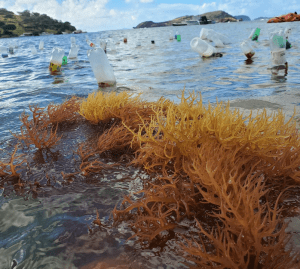
12️⃣ Failing to remove sargassum promptly
Sargassum smothers sea moss, blocks light, and causes rapid die-off.
13️⃣ Not engaging Fisheries Authorities early
Lack of communication creates conflicts, environmental issues, and regulatory problems. Fisheries support exists, use it.
14️⃣ Treating sea moss farming as an individual hustle instead of a system
Successful sea moss industries rely on coordination, standards, and shared learning, not isolated guesswork.
Final Word
 Sea moss farming rewards skill, patience, and responsibility, not shortcuts.
This is why we emphasize Responsible Sea Moss Farming across the Caribbean:
-
to protect marine ecosystems
-
to improve farmer income
-
to meet international standards
-
and to build a resilient blue economy
? For training, consultations & technical support:
WhatsApp: (246) 287-7435
? Support Our Work
Help us build healthier communities and stronger local economies.
This blog is published by Sustainable People & Communities Inc.(SPCI) through the Grow Healthy initiative.