Climate Change & Sea Moss Farming: What the Caribbean Needs to Understand
Sea moss is a water-based marine plant. It has no roots or branches and does not feed from rocks or coral. It grows by absorbing nutrients directly from the surrounding seawater.
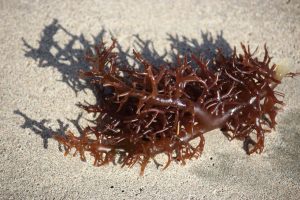 When strong tides, under-currents, storms, or swells occur, sea moss can break free from its growing structure. When this happens, it may cling to rocks, coral, or other objects, this is not a natural growing process, but a survival response.
That is why responsible sea moss farming does NOT involve raiding natural habitats.
Natural sea moss beds should be left intact to maintain marine biodiversity and provide healthy seed stock for future regeneration.
✔️ Commercial sea moss farming is done on ropes, strings, and buoys, secured with anchors, not on reefs or natural seabeds.
How Climate Change Increases Risk Across the Caribbean
Climate change has made sea moss farming more unpredictable:
• Strong under-currents & high tides can destroy farms overnight
• Excess heat can slow growth, cause bleaching, or kill plants
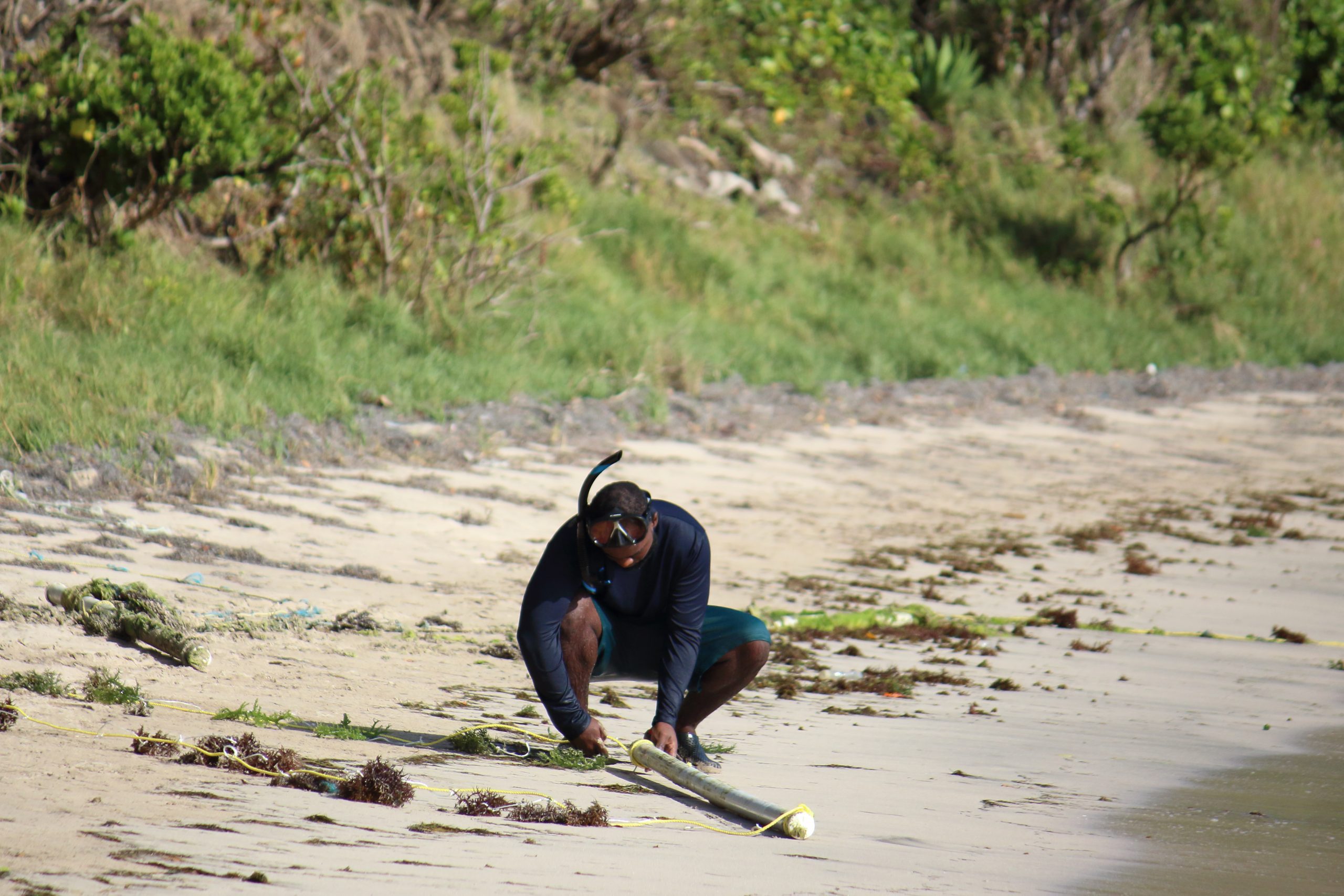
• High winds and storms can scatter farms onto the sand or seabed
One day your farm may look healthy, the next day it can be buried, damaged, or sun-burned.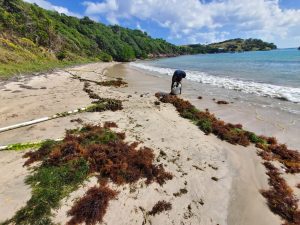
What Responsible Farmers Must Do
✔️ Regular monitoring is essential
✔️ When damage occurs, harvest responsibly once it is safe
⚠️ Do NOT take risks during strong currents, high tides, or rough seas
⚠️ Avoid entering dark or murky water: sea moss farms attract marine life such as barracuda, snappers, stingrays, and moray (conger) eels, which can attack when startled
✔️ Immediate replanting helps preserve seedlings and speed up recovery
✔️ Remove sargassum quickly: sargassum smothers and kills sea moss if left unchecked
Resilience Is Non-Negotiable
Sea moss farming is one of the riskier marine enterprises, especially in a changing climate. However, with the right technical skills and management, recovery can be fast depending on conditions.
After Hurricane Beryl, sea moss farms across the Grenadines were almost completely wiped out. Recovery efforts are ongoing, even as coastal communities manage their own safety, housing, and livelihoods.
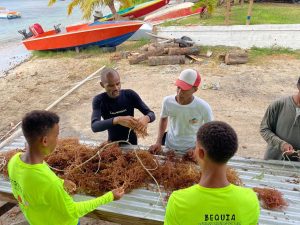 This is why we emphasize Responsible Sea Moss Farming to:
• reduce environmental damage
• protect livelihoods
• strengthen coastal resilience
• and build climate-smart marine systems across the Caribbean
? For consultations & technical support:
WhatsApp: (246) 287-7435
? Support Our Work
Help us build healthier communities and stronger local economies.
This blog is published by Sustainable People & Communities Inc.(SPCI) through the Grow Healthy initiative.